Art in the wild
A forum for music, writing, poetry, art, inspired by nature and outdoor adventures. If you are an outdoor adventurer with songs, stories, drawings to share please send them to me at barryoreck@gmail.com for posting on this page.
A Hut Trippers Journey
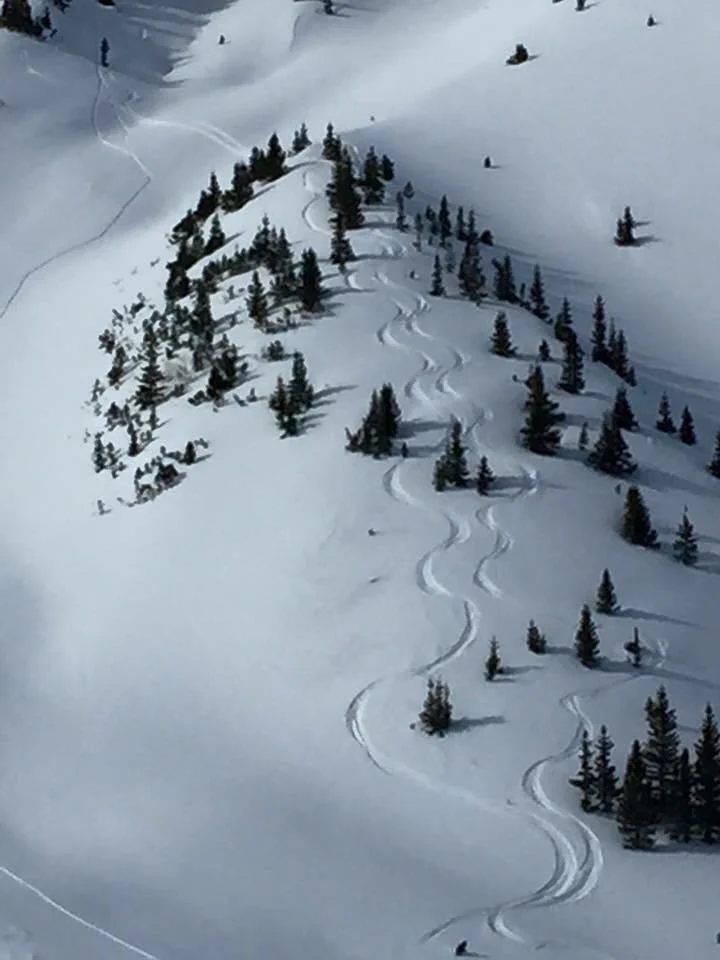
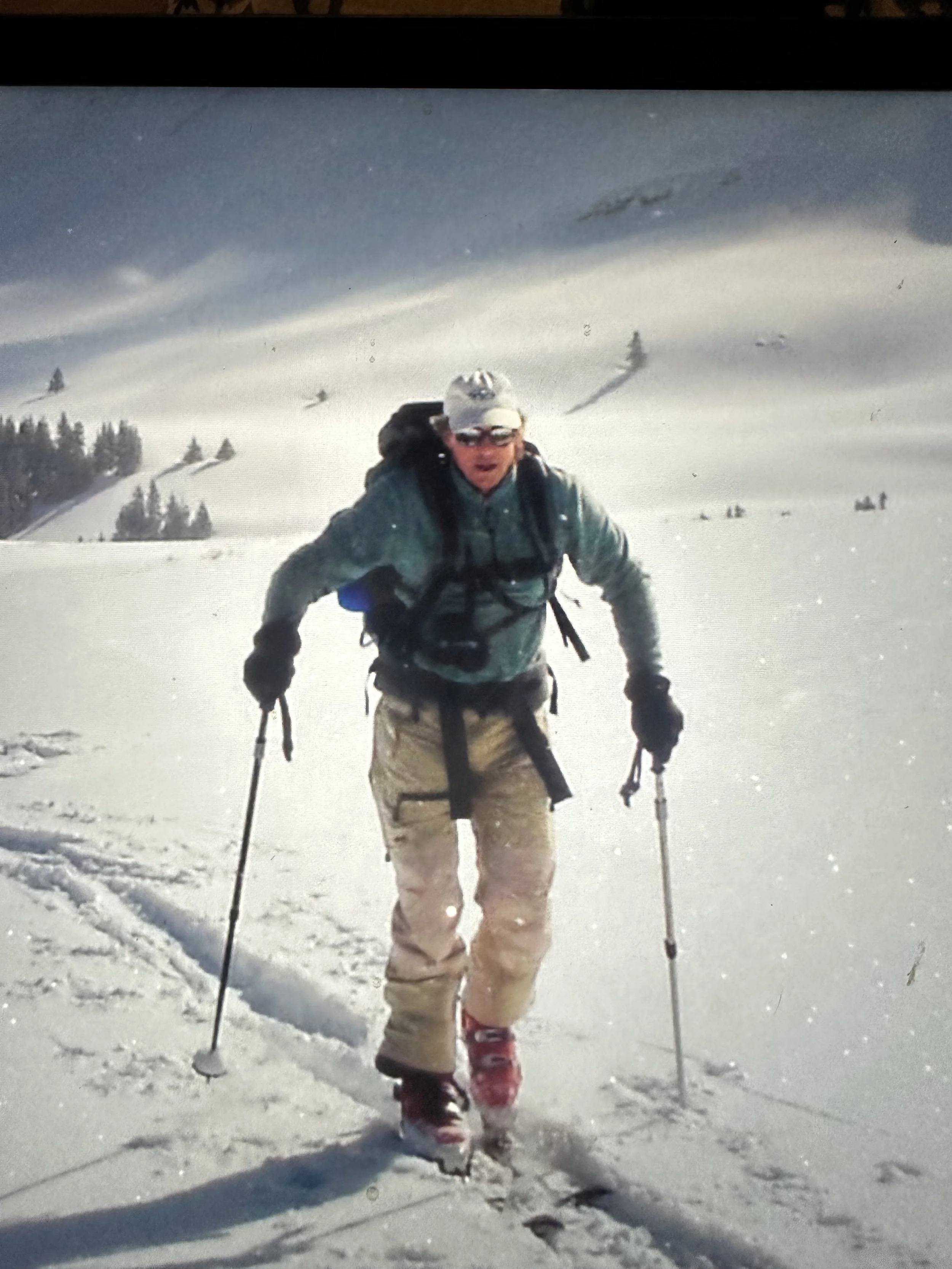
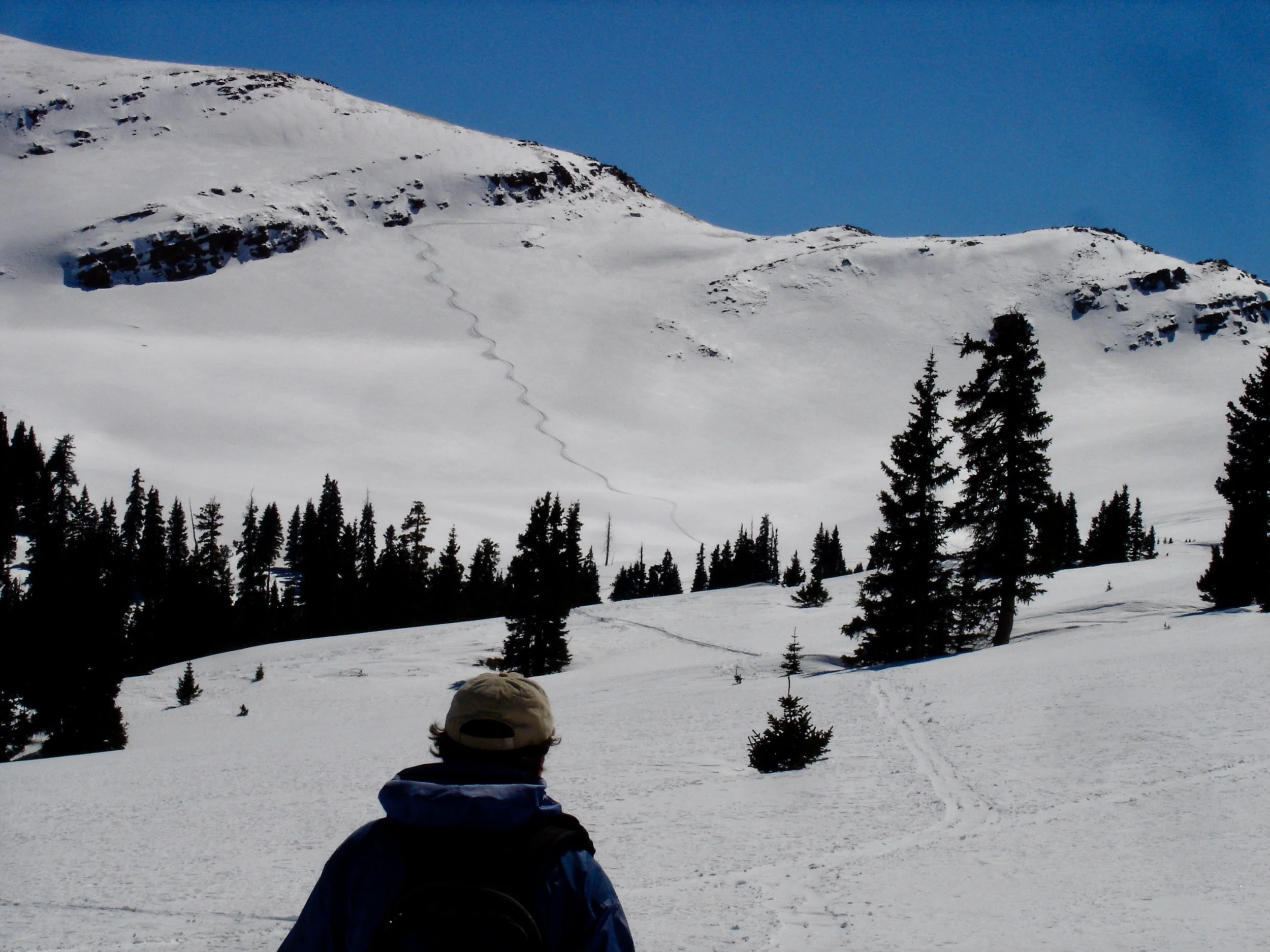
My winter backcountry adventures started in the 1970s in a miner’s cabin in Colorado. On wooden, double-camber cross country skis with new-fangled Silvretta bindings and plastic or mohair climbing skins we (my friend James and an ever-changing cast of Boulder area characters) slogged our way up the long winding forest road to Brown’s Cabin in the Collegiate Peaks near Mt. Yale. The former miner’s cabin was by then a dilapidated shack. We camped out inside, collecting water by breaking through the ice covering a stream that ran by. We skied everywhere we thought we could, which in the early days of telemarking on those long, straight skis was limited only by our lack of ability to turn very much and our youthful feeling of invincibility.
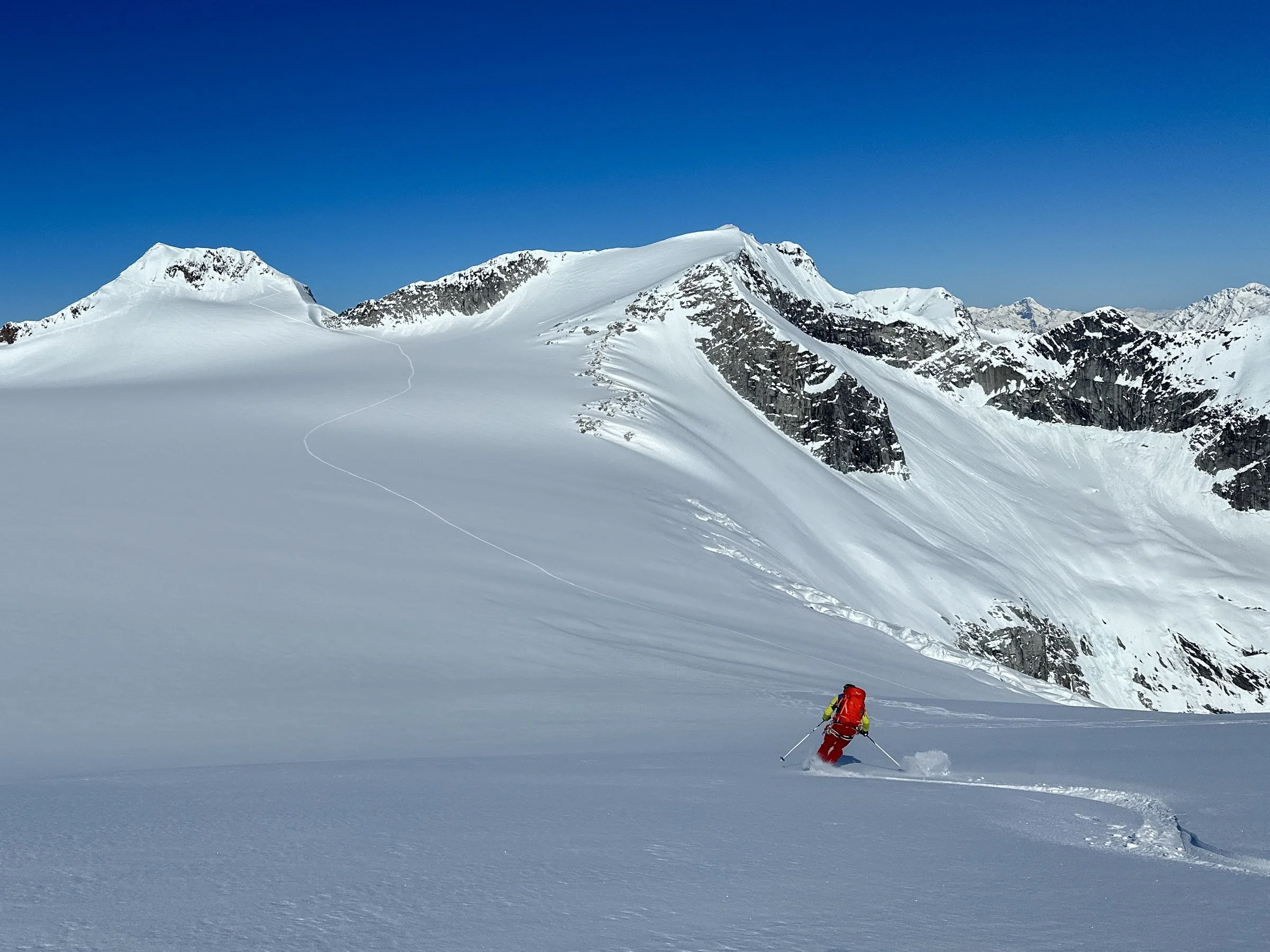
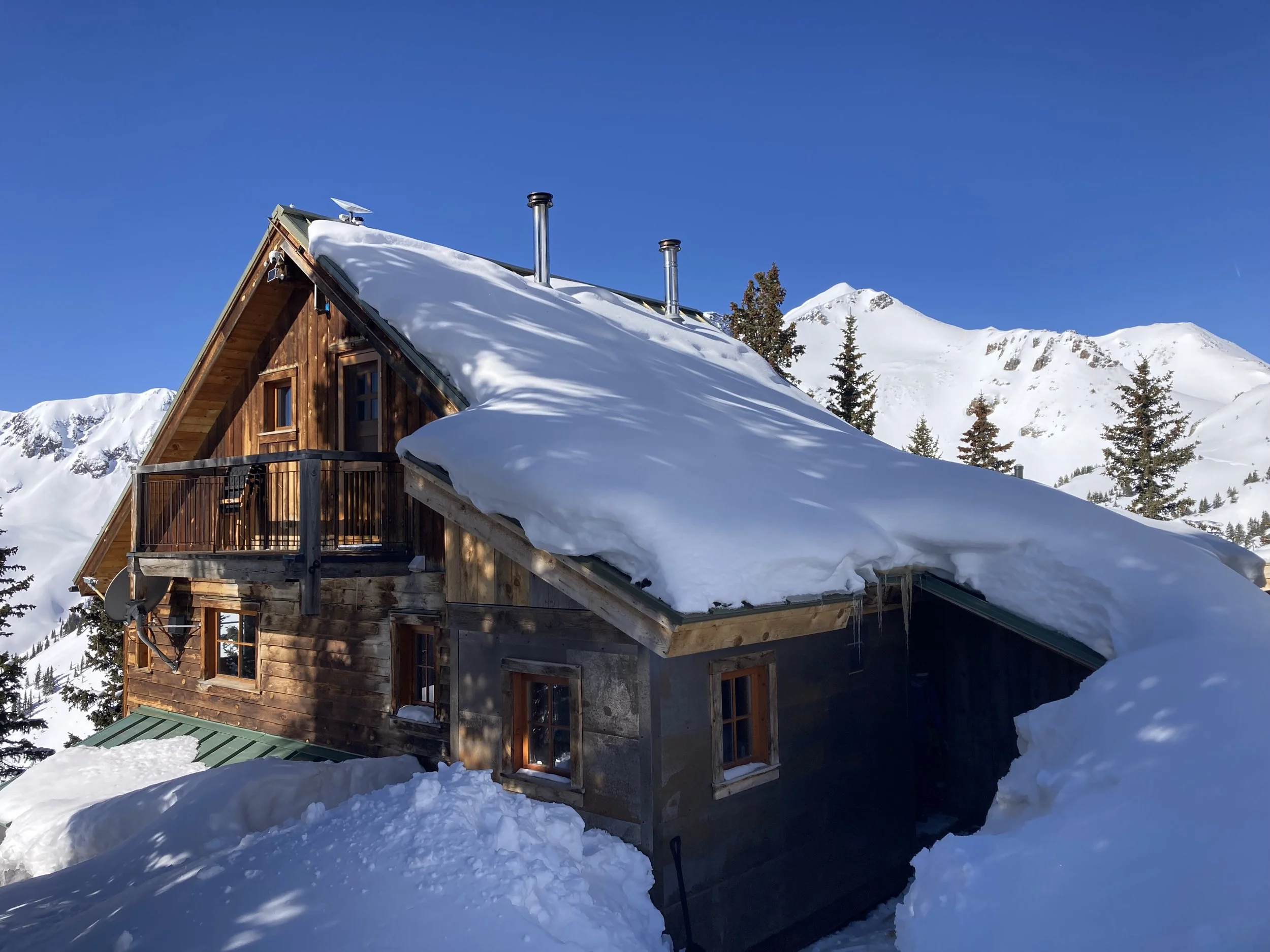
When the 10th Mountain Association huts began opening in the early 80s we mapped out ambitious multi-hut trips, trying to get to all of them. These trips were challenging, sometimes punishing, and always exciting, but we realized that we were spending more time orienteering with heavy packs on our backs than skiing the astonishing terrain surrounding every one of the huts. So, after a few years of hut-to-hut we shifted to just hut. This single destination approach allowed us to thoroughly explore the skiing possibilities around and above tree line while greatly expanding the culinary options, having to shoulder just one hump up the hill. Equipment became more downhill-specific and possibilities for turns in fresh snow, endless. Food and drink became absurdly delicious, a high-altitude Top Chef competition among ravenous foodies. We stayed at almost every one of the 10th Mountain huts along with other huts and yurts around Colorado and New Mexico and in Canada.
The experience of staying in a high mountain hut in winter is different from other kinds of camping and from the bigger European huts that serve food and drink. In small wilderness huts that sleep 10-16 people in mostly self-guided groups you form a special kind of bond among your friends and with the other travelers who have brought themselves to this remote place. You’re skiing all day together, counting on each other, making decisions together, celebrating both epic powder runs and teeth-chattering survival snowplows across icy ridge tops. You climb, slowly, for hours. Time to talk. Time to listen. Time to think.
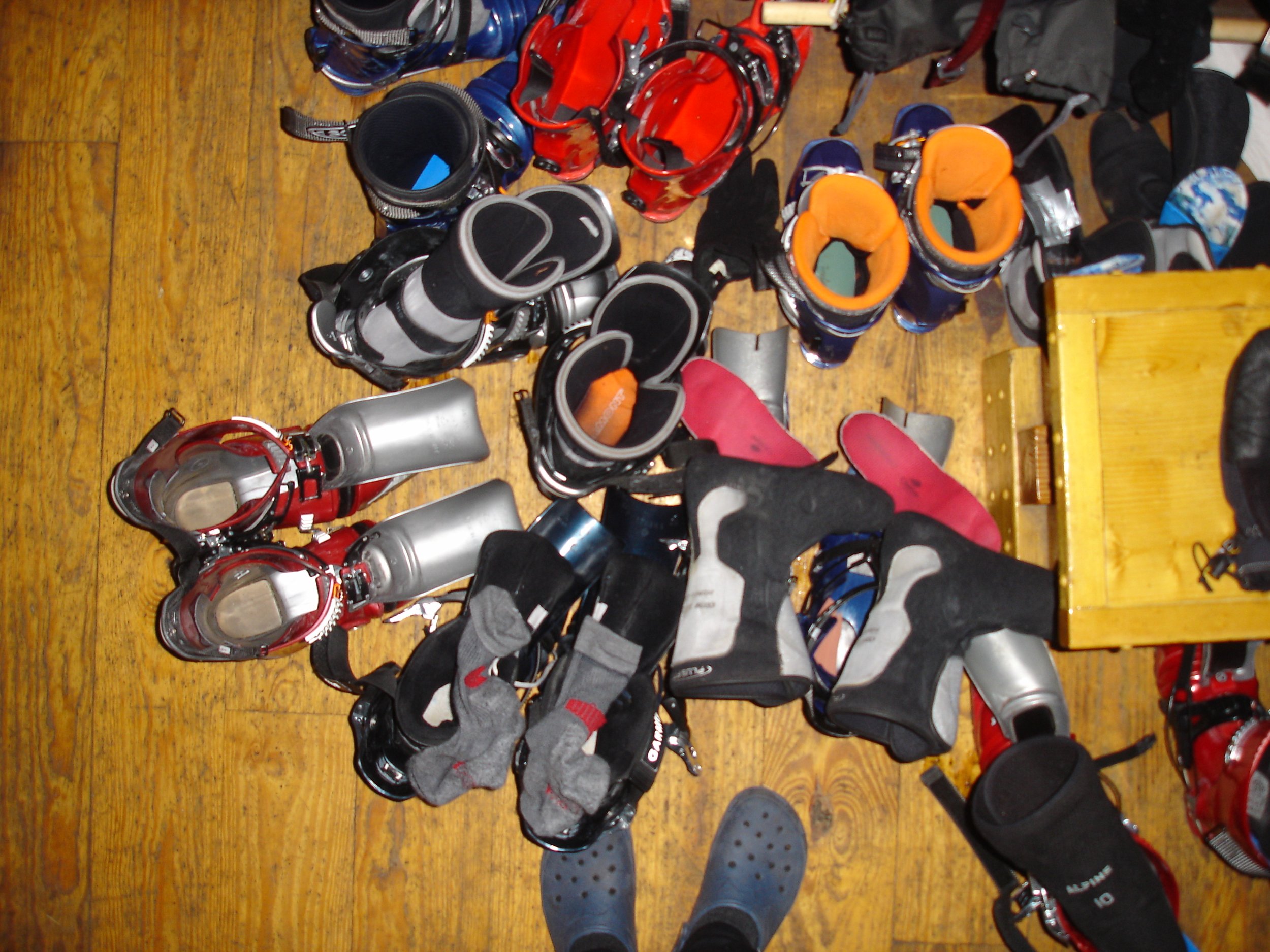
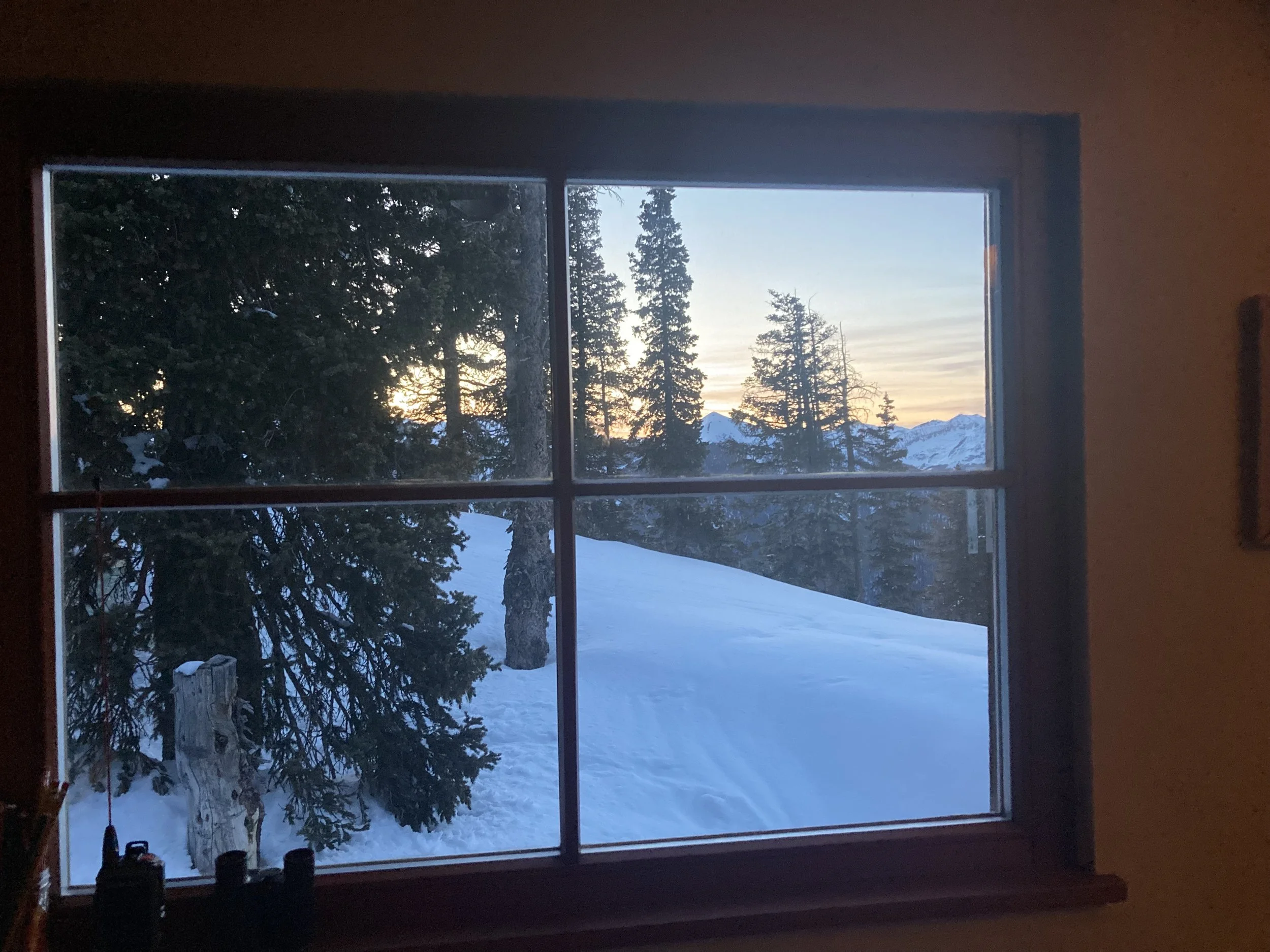
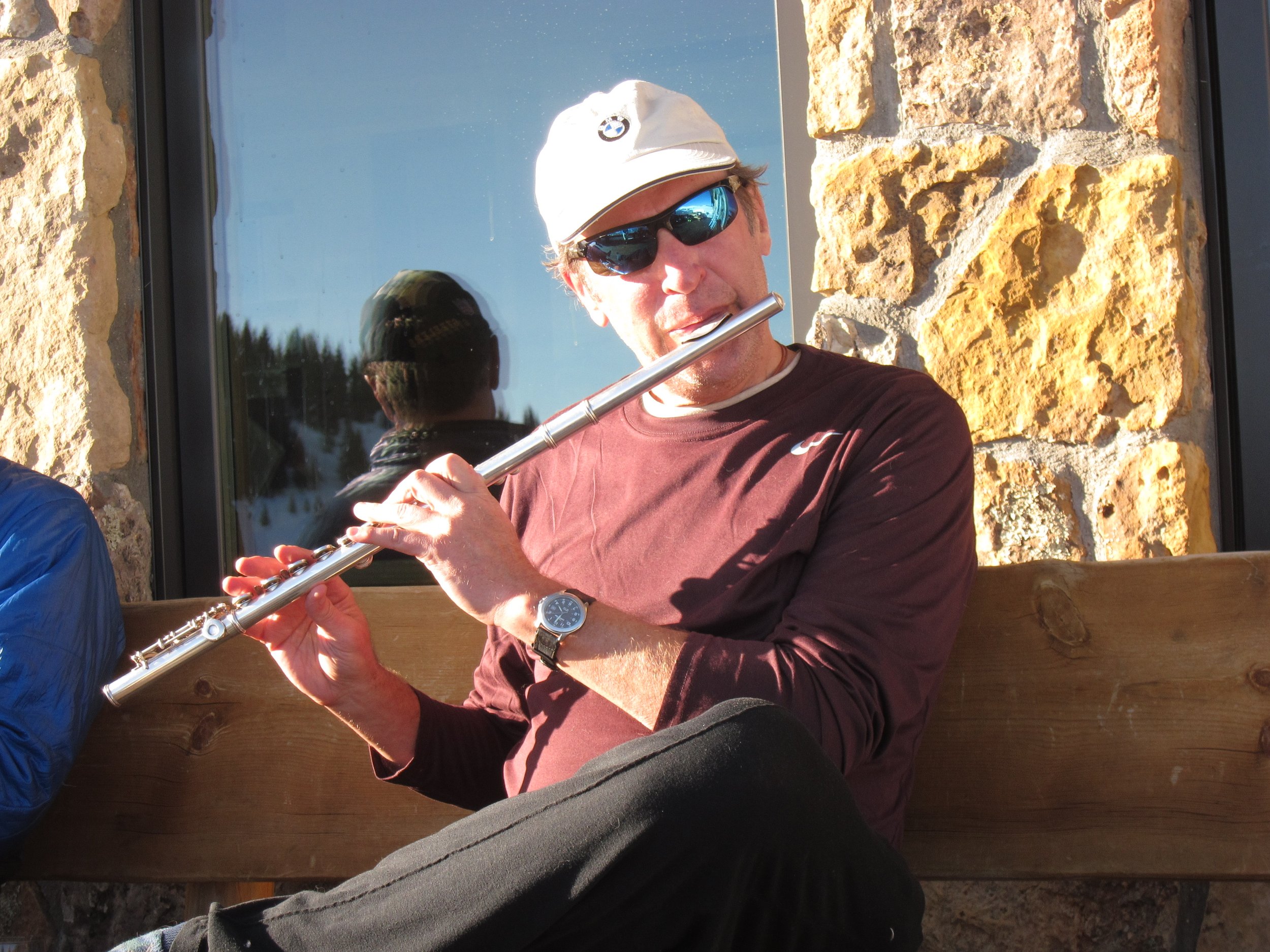
Returning to the hut you hang out on the deck, stripping off layers of gear, looking out at endless peaks glowing in the twilight, amazed at what you’ve climbed and skied. Then you go inside and cook and clean, and fetch and melt snow, and split wood and talk. You help each other -- bind blisters, fix gear, look at maps, share avy info and the day’s highlights and lowlights. Some huts have guitars, and we brought light ones whenever we could, sharing songs we all knew, learning and writing new ones. In the comfort of a warm cabin, stretched out with pillows on padded benches, or sitting at communal tables snacking, playing games, sipping your drink of choice, it is both comfortable and communal. Too luxurious to be described as camping but fully enmeshed in the wilderness experience.
For more than 40 years we have gathered ever-changing groups of friends and compadres at the huts. Sometimes we’d have a big enough group to take over the whole hut. Other times 4 or 6 of us would meet lots of other great ski enthusiasts. We always had some super strong, outstanding skiers in our group who would head for the very top and the most challenging pitches. Others were happy with low angle frolics in open meadows. Some spent the days touring; others would search out a sweet stash of powder and yo-yo up and down it. I was often in catch-up mode, having done 90% of my telemark skiing on the hard pack of Eastern slopes and then being dumped into bottomless powder and changeable crud in the backcountry. It took me a while to adjust, sometimes not in time for the final wild ride down the mountain with a bulging pack. No style points to be won there.
Those hut trips defined my winters. I missed a few here and there, but it always gave me a goal to get in shape and to improve my skiing. Even in years with low snow or with major avalanche danger when our choice of ski terrain was limited, we found incredible skiable slopes and took astonishing tours along ridges up peaks, exploring awe-inspiring landscapes and terrain. Each hut and each trip was different. From the comfort of the tight, well- designed 10th Mountain Division huts to drafty plank cabins with triple decker bunks. From indoor composting toilets to butt-freezing toilet seats over 55 gallon drums. From easy 1-2 mile forest road kick and glides to demanding 6-7 mile approaches up poorly marked, icy switchbacks. And in recent years we’ve luxuriated in full-service huts that supply the food and drink and fire up the sauna for you at the end of the day. All the trips blend in my memory into one magic adventure.
These days we’re meeting a lot more younger people up at the huts. For years everyone tended to be around our age even as the decades piled up. Now people in their 20’s and 30’s, often on split boards, are regulars. Gear improvements have opened the backcountry to more people and have in theory, increased safety. But the high-tech gear also provides false security and tempts people to take more risks. The knowledge that you can call in a helicopter by a push of your Garmin wrist band does not mean you should try that untouched chute. But the hut ethos of earning your turns, testing your endurance and resolve, relying on yourself and your companions, living communally and simply above tree line envelops all who enter. I come back to New York City each year changed for the better.
The pain v. gain equation has changed for me at age 73. I don’t know how many more turns I need to earn. I’m just incredibly lucky to still be telemarking and tromping through the backcountry on fat, skinny, or in-between skis. I’ll always look for the untracked path, always appreciate the woods over the resort, always feel greater satisfaction in the rush of the ride after pushing against gravity to get it, and find the deepest connection to nature when moving through it, slow or fast, under my own power.
The Smooth Ride
I love to walk in the city, and I also love to ride my bike. So I was chagrined to hear a friend, a native New Yorker, recently say, “Biking has changed the way I feel about living here; it has obliterated one of my chief joys--walking the city. Every day, I believe my safety, as well as that of every other pedestrian, is at risk.” In the last decade more than 1500 miles of new bike lanes (650 miles dedicated) and 1700 bike rental stations have been a boon for cycling (with numbers of cyclists more than doubling) but as my friend and every New York City pedestrian knows, it has fundamentally altered the walking experience. Electric powered delivery bikes buzz the streets, with or against traffic. Power-assisted Citibikes allow commuters and casual day-trippers to ride at the speed of professional cyclists. Magnifying the danger on the streets, car and truck traffic has also increased (14% above pre-pandemic levels ), and distracted and aggressive drivers meet cellphone-preoccupied and headphone-wearing pedestrians, adding to an atmosphere of obliviousness, impatience, and intolerance. Though better infrastructure helps, the situation seems unlikely to improve simply by having more green painted bike lanes and better signage. Especially where riders meet walkers, we need some behavioral adjustments.
At 72, with biking a bigger part of my exercise routine, I’ve had to find ways to face and alter the fear dynamic both inside and outside of me, an approach I call the Smooth Ride. A Smooth Ride moves through the world in harmony. It’s central aim is to create zero additional fear or anxiety in me or any other human being I encounter on foot, bike, car, bus, truck, stroller, scooter, or wheelchair. An even higher goal: to have positive interactions with others as often as possible, negotiating the space peaceably in the language of movement and eye contact.
I still like to go fast but fast is relative. Everyone is going somewhere. Getting there safely means that we all get there safely. When the distracted person steps into the bike lane staring at her cell phone and I slow down at a distance with a gentle tap on my bell she looks up, we make eye contact, she smiles and sheepishly nods at me as I ride by; a potentially scary confrontation has turned into a positive one. The dapper gentleman with a cane slowly crossing the street against the light subtly tips his hat when I slow to allow him to reach the curb. I feel pleasure and curiosity, rather than annoyance when I come upon four generations of a Hassidic family filling the bike lane under the Verrazano bridge and I get off and walk my bike around them. I could have squeezed by, but I don’t. I make eye contact with the teenage boy of the family -- apparently the only one realizing where they are and that his 90-year-old grand bubbeh and newborn sister are at risk – and he gives me the sweetest smile. When the turning car stops for me, or the truck allows me to make the turn ahead of him, I acknowledge them with a wave and feel the positive vibe. Every ride has many such negotiations and each one feels like a small step for humanity in an increasingly rude, short-tempered world.
The smoother choice is not always to yield or slow down. Sometimes it’s better to move through and clear the space. It depends – does everyone see me coming, have we made clear eye contact, might someone be startled when I pass or when they step out from between cars? While slowing down in front of people, I often take a foot off the pedal so they can see that I am prepared to stop. When waiting at an intersection I put a foot on the ground and calmly gather myself to communicate to the crossers that I’m not impatiently waiting to blast by them at the first opportunity. Lower the temperature, lower the fear. People seem genuinely grateful and surprised to encounter a courteous cyclist looking out for them. The ratio of smiles to grimaces (or shrieks, epithets, middle fingers) is a clear measure of smoothness.
Though cruising along, hitting all the green lights (easier now with the countdown clocks) brings pleasure, stops and interruptions are a vital part of the Smooth Ride -- a chance to look around, settle into a place for a moment, take in the scenery, architecture, people on the street. When on a moving bike, focusing on the traffic and pavement, I can be unaware of miles of surroundings. Each pause resets my attention and reminds me to look at this fascinating, truly diverse conglomeration of neighborhoods and people I live with. One of my favorite short rides (about an hour) -- a loop into and out of Manhattan over the Brooklyn and Williamsburg Bridges -- takes me through at least nine distinct neighborhoods, each one delineated by a mixture of people and styles of dress on the street, different languages on the bakery shop signs, smells of food, sounds of music. When I get back to my neighborhood, I see it with fresh eyes.
Flat pavement is a big plus for smoothness. But obstructions, potholes, storm grates, construction sites are unavoidable. Each is an opportunity to practice anticipation, creativity, and some mountain bike technique, finding the smoothest way through the danger zone. The challenges to smoothness – physical and interpersonal – enhance the satisfaction of finding the smoother path. Rolling, gliding, moving purposefully but calmly through this complex terrain is truly a state of flow. Flow is the balance between urgency and calm, effort and relaxation, momentum and pause, fast and not in a hurry.
Smooth has different facets on different days depending on mood, wind, weather, time, traffic, destination, the shape of my day. Smooth can be fast and exhilarating, as I catch all the lights on the 6th Avenue bike lane right up the center of Manhattan, or slow, bucking the wind down the Hudson River bike path. A trip home from the plant nursery on bumpy streets with a basket full of tender plants is an extra challenge to smoothness and a waterfront ride around Brooklyn, a time to let my mind wander and body find its own smooth pace.
Within the first block of starting out on a ride, whether I know where I’m going or not, I tell myself I am going to make this an especially smooth ride and that helps me settle into the ride physically and psychologically. I think of my ABCs: Anticipation -- looking ahead for people, car doors, obstructions, and bumpy pavement; Breath --- remembering to breathe, take in the scenery, stay calm; and Communication – eye contact, hand signals, making intentions clear to all other movers. That’s basically it. Smoothness is a state of mind.
When focused on the safety and comfort of everyone around me, appreciating and noticing my surroundings, feeling one with my bike and body, I return home feeling better about myself and the city I live in. No ride is perfectly smooth. Our biking culture is not yet at the level of Amsterdam or Copenhagen. Separated bike paths only take you so far and motorists often ignore “shared” on-street bike lane markings; constant vigilance is crucial. But when I practice lowering rather than raising the anxiety of my fellow travelers it feels like a small and meaningful contribution to a saner world. And, I should add, the Smooth Ride philosophy works well off the bike, too.
-
Barry Oreck
RADIO RELEASE DATE:
December 8, 2025
PRODUCED BY:
Barry Oreck and Bob HarrisCONTACT: Barryoreck@gmail.com
Folk singer-songwriter Barry Oreck’s new album is a collection of songs inspired by adventures in nature. Through decades of backcountry skiing, paddling, riding, hiking, and exploring wild places, Oreck has written songs that capture his reverence for the outdoors and the physical and mental challenges of pushing oneself to the limit.
Backcountry Ballads features four newly recorded songs written in backcountry huts in Colorado and Canada along with six recorded on previous albums. The tunes range from rousing bluegrass to bluesy ballads exploring many aspects of the backcountry experience. From uphill climbs (Grunt Factor, To the Top), to fast downhill runs (One More Run, Ride), to life in backcountry huts and yurts (Hut Trip Lullaby, Bill Stewart’s Guitar, Cramps), paddling (Geezer in the Weeds) and environmental anthems (Don’t Take the Road, Gentle Arms of Eden), the album celebrates self-reliant, self-powered exploration in wild places and the search for balance, peace, and focus in this increasingly disembodied and distracted time.
Oreck is accompanied by multi-instrumentalist (as well as co-producer and engineer) Bob Harris, in addition to his virtuosic Brooklyn band “and Friends” -- Jesse Miller on guitar, mandolin, and vocals; Rima Fand on violin and vocals; Adam Armstrong on bass. Their most recent album, We Were Wood (2025) reached #7 on the US Folk charts in March 2025. Other stellar musicians on the album include Andy Leftwich (Ricky Skaggs’ band), Kevin Garcia (The Steel Wheels), Anthony Hannigan (Hickory Project), and Michael Ronstadt (Nathans and Ronstadt).
Barry’s Backcountry Ballads Track Descriptions (All songs FCC Compliant) (BMI)
1. Ride (3:22 on Leap Year album) “giving up to gravity, on the edge of insanity” Written at the Opus Hut (CO) as we looked out over the valley at our tracks after four days of skiing fresh powder, this rollicking tune celebrates the weightless abandon of downhill runs, finding the sweet spot between careful and crazy, fear and flow.
2. One More Run (2:13) “when they scrape us off the valley floor we’ll still be screaming ‘just one more’” I wrote this one with long-time (since age 4) friend and ski partner James Marienthal at Opus Hut (CO). At our advanced age we somehow continue to inspire each other to just peek over the next rise, or to take a “couple” more turns to explore an opening and then -- ‘what do you know?’ – we’re doing one more run. This tune features great bluegrass fiddle work from Andy Leftwich (Ricky Skaggs’ band).
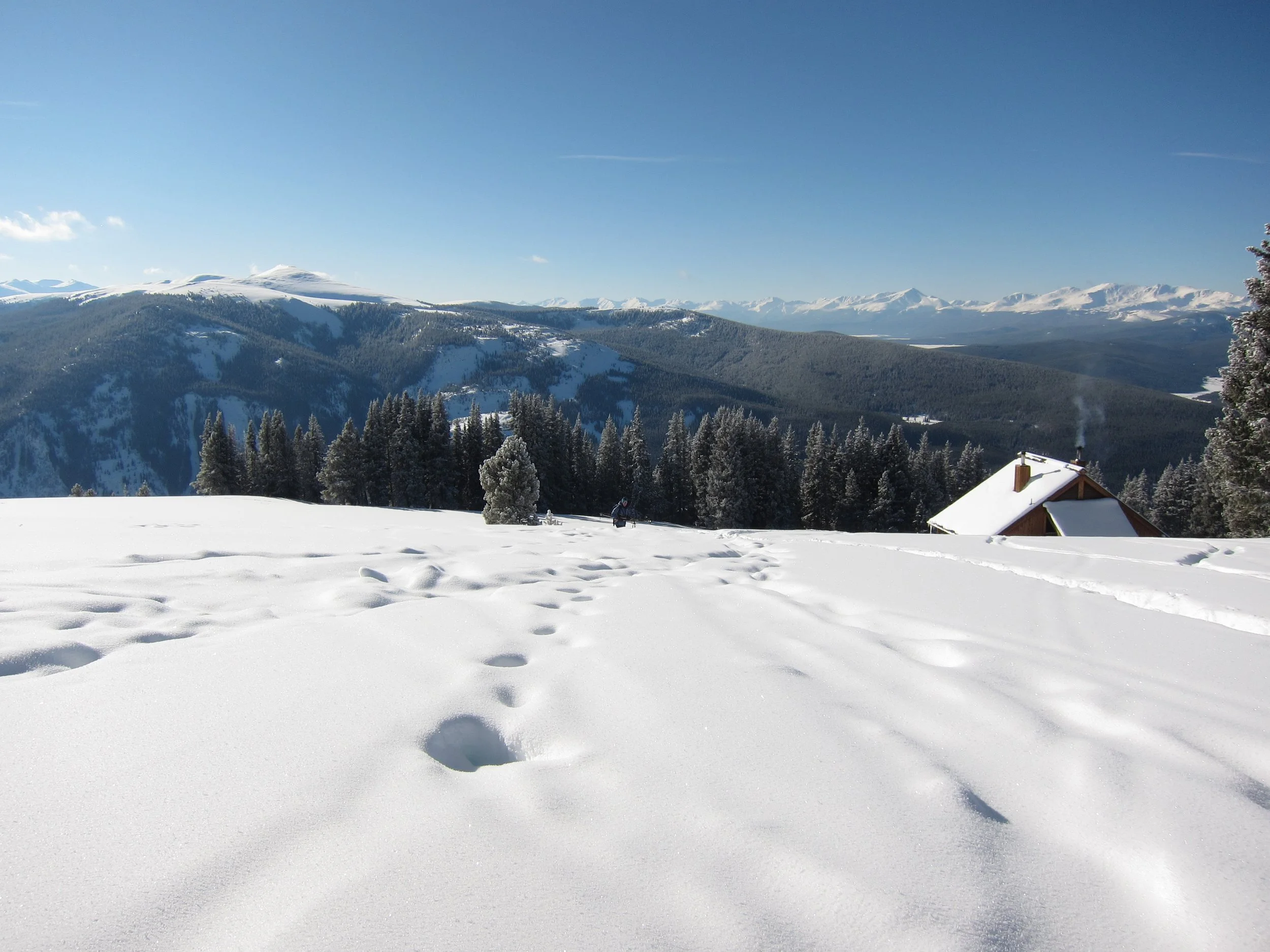
3. Don’t Take the Road (5:10 on the Barry Oreck album) “jump on the trail and off of the street, crunch some leaves under your feet” I wrote this on a forest road near Fowler-Hilliard Hut (CO) as we climbed toward previously untouched slopes while snowmobiles roared past, pulling skiers headed for the same spot and enveloping us with noise and exhaust fumes. We climbed off the road and found perfect quiet, astonishing views, and the deep satisfaction of making our own path under our own power. The song was finished before I reached the hut at the top of the climb.
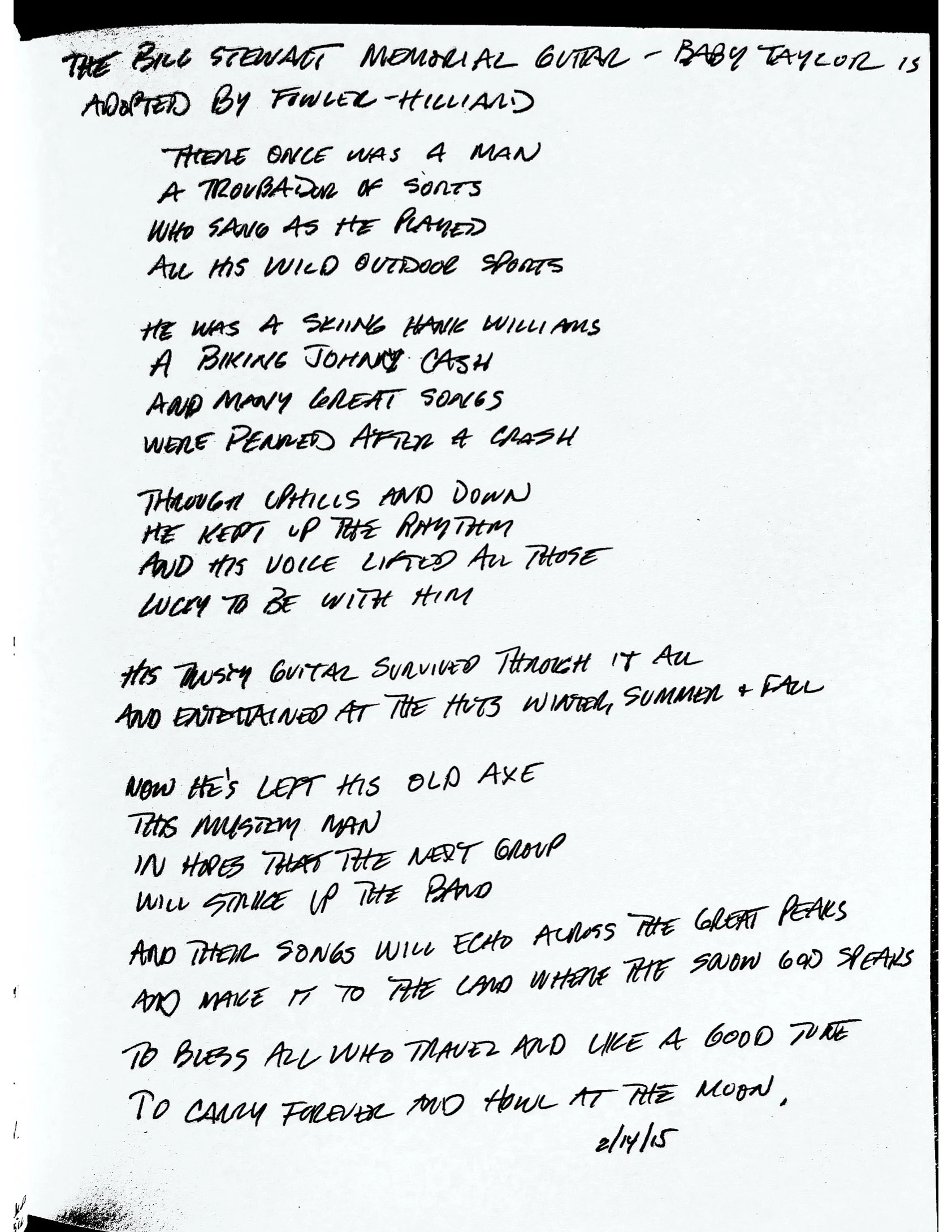
4. Bill Stewart’s Guitar (4:49) “his voice lifted all of us lucky to be with him” I wrote the words in the logbook at Fowler-Hilliard Hut (CO) to commemorate Bill’s gift of his guitar to the hut. He was truly a legend – an elegant and fearless skier and rider, monster climber, gifted musician, inspirational friend and outdoor companion. I turned the log entry into a song for his memorial in Boulder in 2018. Will Cooter was his band and musical nom de plume.5. Cramps (3:58 on How the Bright Earth Spun album) “I feel like a frog in a science experiment” Written at Janet’s Cabin (CO) in intense pain while my friends laughed at my St. Vitus dance. An occupational hazard after a day of huge physical exertion, cramps can become public performance art in the cozy communal living room of a small hut. I didn’t know about pickles for cramps when I wrote the song. I should add a new verse.
6. Grunt Factor (3:31 on Barry Oreck album) “the more you go down, you’ve got an up situation” Written at the Eiseman Hut (CO) after an epic ski into the hut in a blizzard. This song encapsulates the essential truth of backcountry skiing: No Up-No Down, No Pain-No Gain. The effort and time involved in climbing makes the downhill that much more satisfying (actually true about any athletic endeavor or human pursuit).
7. To the Top (5:03) “to the stars, to the valley down below” My first backcountry ski song. I went to Ruedi Berlinger’s Selkirk Mountain Experience in British Columbia, Canada in 2001. We rose in the dark and climbed all morning, sometimes 4 or 5 hours before de-skinning and skiing down. There is a whole lot of time to let rhythms and words float into your brain when you are slowly marching uphill for that long. I’ve found this song to be a great climbing companion.
8. Gentle Arms of Eden (4:24 on How the Bright Earth Spun album) “this is our home, this is our only home” The history of life on earth in 4 verses. Written by Dave Carter. This is one of the most powerful environmental songs I know.
9. Hut Trip Lullaby (4:03) “it wouldn’t be a real vacation without some sleep deprivation” Written at Janet’s Cabin (CO) after some long nights of very little sleep. It’s hard enough to sleep at 11,500 feet but in communal sleeping arrangements sometimes the loud sleepers are spread out to every room, creating a beam-rattling snorchestra. Epic skiing + sleep deprivation made us all a little loopy.
10. Geezer in the Weeds (5:29 on We Fit Together album) “I let the wind tell me where to go and the stars when it’s time to sleep” A fleeting glimpse of a hat and a fishing pole sticking out above the tall reeds on Lake Durant in the Adirondacks (NY) piqued my curiosity and envy for the person spending their day in that peaceful pond.Barry Oreck and Friends featuring:
Barry Oreck – Guitar and lead vocals
Bob Harris – Guitar, mandolin, slide guitar, percussion, squeeze box, organRima Fand – Violin, harmony vocals
Adam Armstrong -- Bass
Jesse Miller – Guitar, harmony vocals
Guest Artists
Kevin Garcia -- percussion
Andy Leftwich -- fiddle
Michael Ronstadt -– cello
Anthony Hannigan -– mandolin
J Granelli –- bass
Rusty Holloway –- bass
Mixing and Mastering: Bob Harris
Bill Stewart’s Guitar
When Bill Stewart donated his guitar to the Fowler Hilliard Hut in Colorado I wrote this poem to commemorate (and mythologize a bit) about this extraordinary athlete/musician. Later turned into the song Bill Stewart’s Guitar